



Major Update! Phase III Trial Data of Deutenzalutamide Included in the 2026 ASCO Guideline
Recently, the key Phase III data from the HC-1119-04 trial (deutenzalutamide) have been formally incorporated into version 2026.1.4 of the American Society of Clinical Oncology (ASCO) Guideline on Systemic Treatment for Metastatic Castration-Resistant Prostate Cancer (mCRPC), as new clinical trial evidence in the guideline’s evidence-based background section. This marks formal recognition by an international authoritative guideline of the clinical value of deutenzalutamide, a novel androgen receptor pathway inhibitor, in patients with mCRPC who have progressed after prior docetaxel and androgen receptor signaling inhibitors (ARSI).
In this guideline update, the ASCO Expert Panel included the HC-1119-04 trial results as additional background evidence, strengthening the evidence base for subsequent treatment options in mCRPC. This not only affirms the quality of the deutenzalutamide clinical program, but also encourages further exploration of its potential in broader patient populations and in combination regimens.
The HC-1119-04 trial was a multicenter, randomized, double-blind, placebo-controlled Phase III study conducted at 36 centers in China. Eligible patients had histologically or cytologically confirmed metastatic prostate adenocarcinoma (without small-cell features), and had either progressed on or been intolerant to abiraterone and docetaxel, or were unsuitable for docetaxel. All patients maintained castrate-level testosterone (<50 ng/dL or 1.73 nmol/L).
Patients were randomized 2:1 to receive deutenzalutamide 80 mg once daily orally or placebo, continuing until radiographic or clinical disease progression or unacceptable toxicity. To avoid confounding of survival endpoints by subsequent therapy, crossover from placebo to deutenzalutamide after progression was not permitted.
The primary endpoint was investigator-assessed radiographic progression-free survival (rPFS). The key secondary endpoint was overall survival (OS). Other secondary endpoints included BICR-assessed rPFS, disease control rate (DCR), objective response rate (ORR), prostate-specific antigen (PSA) response rate, time to PSA progression (TTPP), and overall safety.
Efficacy outcomes
Investigator-assessed rPFS
Deutenzalutamide significantly improved investigator-assessed rPFS versus placebo (HR=0.58; 95% CI: 0.44–0.77; P=0.0001), corresponding to a 42% reduction in the risk of disease progression or death.
Median rPFS was 5.55 months (95% CI: 4.83–7.36) in the deutenzalutamide group, compared with 3.71 months (95% CI: 2.86–5.49) in the placebo group, demonstrating clear disease control benefit.
Long-term follow-up showed sustained rPFS advantage: at 12 months, the progression-free rate was 29% (95% CI: 21.7–36.7) with deutenzalutamide versus 6% (95% CI: 0.7–19.6) with placebo; at 24 months, 18% (95% CI: 10.7–26.4) of patients in the deutenzalutamide group remained progression-free, whereas no patients in the placebo group maintained continuous progression-free status, suggesting durable disease control potential in a subset of patients.
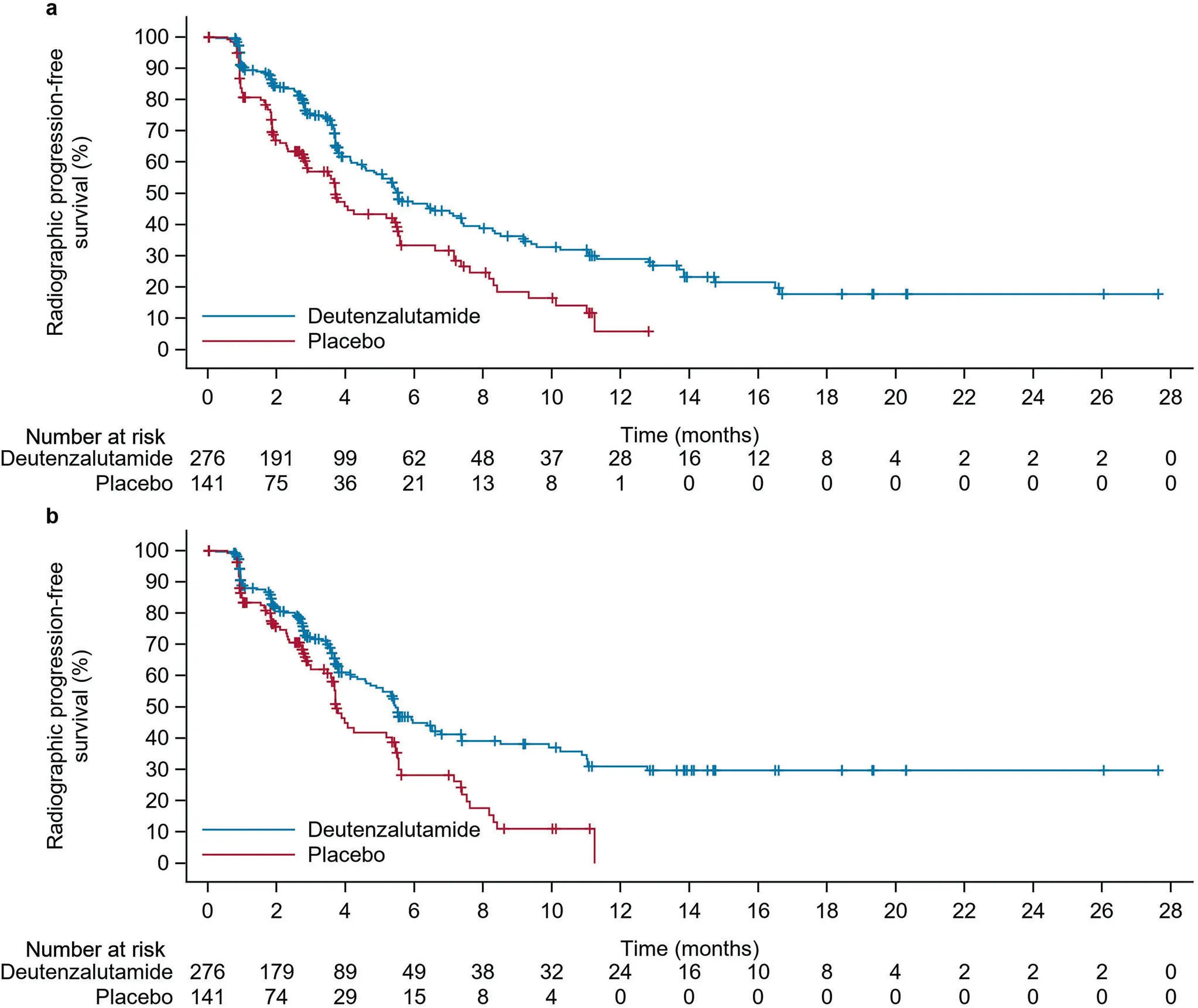
Kaplan–Meier estimates of median PFS assessed by investigators (a) and by a blinded independent central review (b).
Pre-specified subgroup analyses showed consistent rPFS benefit across all prespecified populations, including age (≥75 vs <75 years), presence of visceral metastases, prior docetaxel use, baseline ECOG performance status, and baseline PSA level, indicating stable and broadly applicable efficacy.
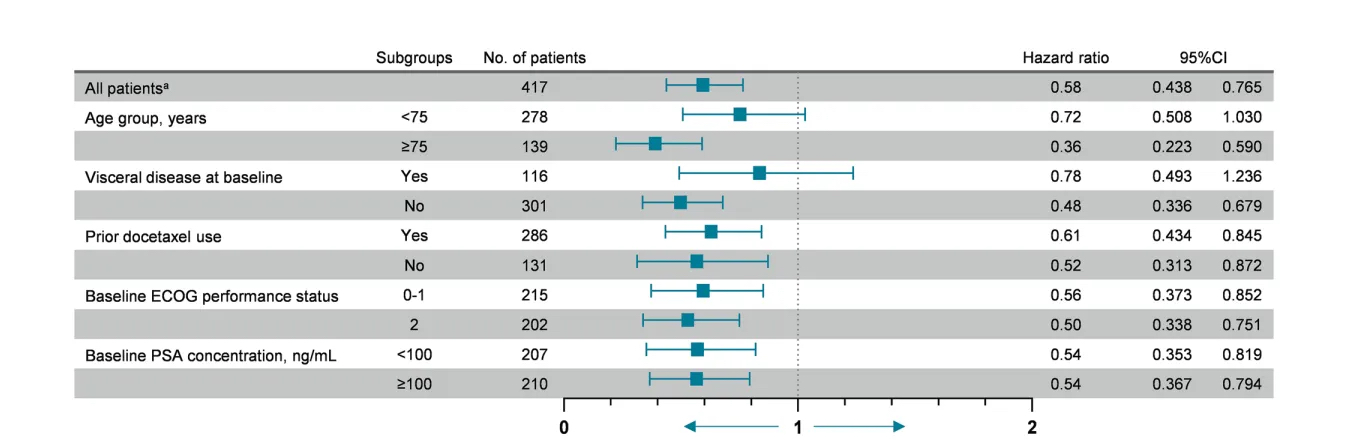
Pre-specified subgroup analysis of investigator-assessed rPFS in all patients.
Overall survival (OS)
As of February 28, 2023, 317 deaths had occurred. The unadjusted final OS analysis did not show a statistically significant difference between deutenzalutamide and placebo (HR=0.95; 95% CI: 0.76–1.20; P=0.697).
Notably, extensive subsequent anticancer therapies were administered after progression in both arms, with a higher proportion in the placebo group receiving subsequent treatment (70.2% vs 51.8% in the deutenzalutamide group), suggesting that subsequent therapy may have substantially confounded the OS outcome and diluted the original treatment effect.
To better estimate the true survival benefit of deutenzalutamide, sensitivity analyses using inverse probability of censoring weighting (IPCW) and the rank-preserving structural failure time model (RPSFTM) were conducted to adjust for the impact of subsequent therapy. After adjustment, both methods consistently showed a statistically significant OS benefit with deutenzalutamide:
·IPCW分析:HR = 0.73(95% CI:0.56~0.95),P = 0.018
· IPCW analysis: HR=0.73 (95% CI: 0.56–0.95; P=0.018)
·RPSFTM分析:HR = 0.65(95% CI:0.51~0.82),P = 0.0004
RPSFTM analysis: HR=0.65 (95% CI: 0.51–0.82; P=0.0004)
These results indicate that, after accounting for the confounding effect of subsequent anticancer therapy, deutenzalutamide has clear survival benefit potential in this heavily pretreated mCRPC population, and its true efficacy may have been underestimated in the unadjusted analysis.
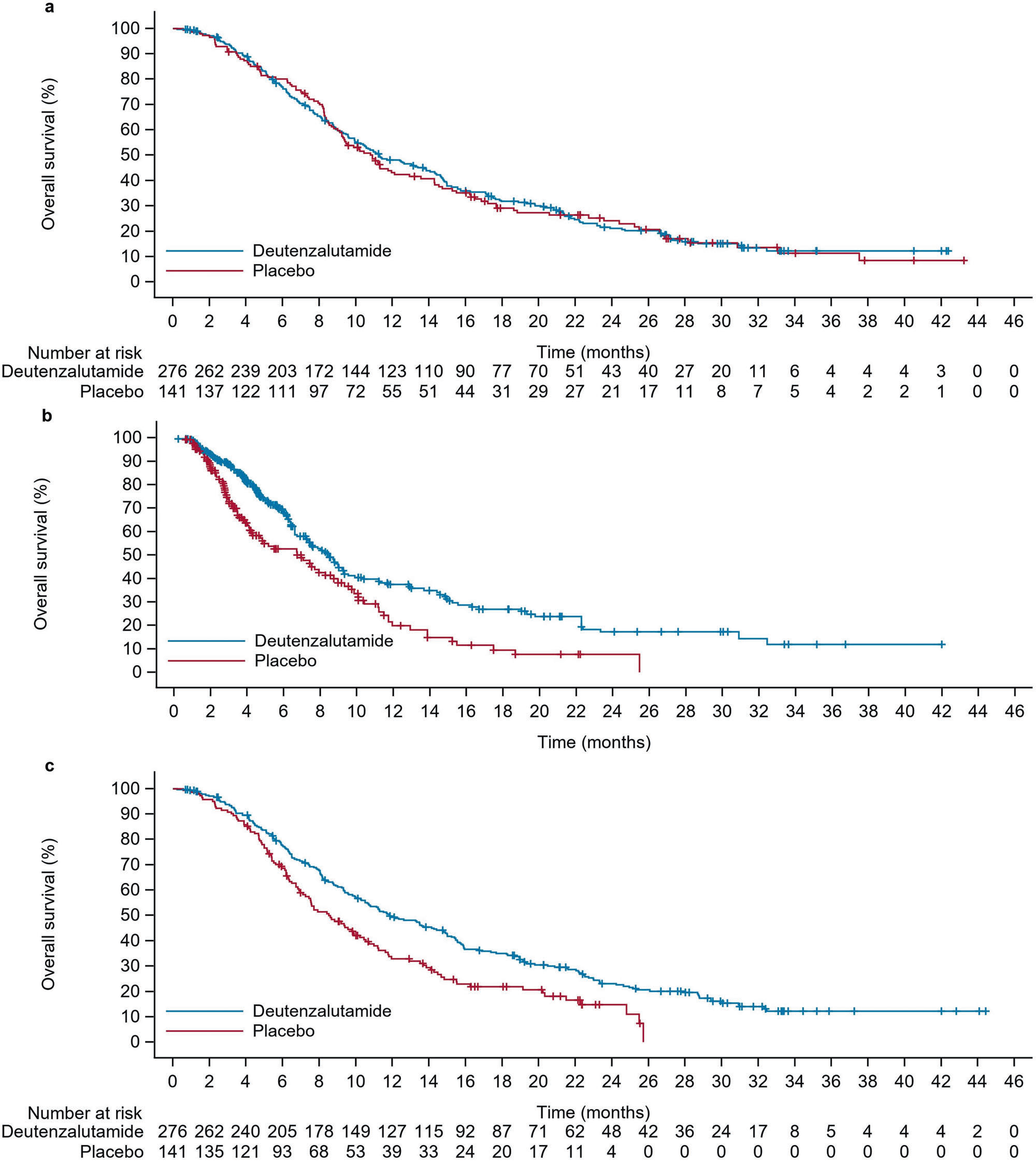
a. Kaplan–Meier estimates of unadjusted OS in patients receiving subsequent anticancer therapy.
b, c. Kaplan–Meier estimates of adjusted OS in patients receiving subsequent anticancer therapy: panel b adjusted by naïve censoring and IPCW; panel c adjusted by RPSFTM.
The HC-1119-04 study confirms that, in mCRPC patients previously treated with abiraterone and docetaxel, deutenzalutamide 80 mg once daily significantly prolongs rPFS, reduces the risk of disease progression or death by 42%, and sustains clinical benefit on long-term follow-up, reflecting stable and durable disease control. After full adjustment for subsequent anticancer therapy, OS also showed a consistent benefit trend, further supporting its real-world clinical value.
Safety profile
Deutenzalutamide was generally well tolerated, with no central nervous system–related adverse events such as seizures or falls observed, consistent with a low CNS toxicity profile that distinguishes it from traditional agents in the same class. This safety advantage is particularly important for older patients, those with comorbidities, or those on multiple concomitant medications, and may help improve treatment accessibility and persistence.
Given its clear efficacy benefit and optimized safety profile, deutenzalutamide has the potential to become an important treatment option for mCRPC patients in the post-abiraterone/post-docetaxel setting, addressing an unmet need where standard treatment options are currently limited, and providing new evidence and practice pathways for treatment strategies in the post-ARSI era.
About Deutenzalutamide Soft Capsules
Deutenzalutamide soft capsules (brand name: Haina’an®) are a Class 1 innovative drug independently developed by the company for adult patients with metastatic castration-resistant prostate cancer (mCRPC) who have progressed after treatment with abiraterone acetate and chemotherapy and who have not previously received a novel androgen receptor inhibitor. It is a second-generation androgen receptor (AR) inhibitor and has been supported by the National Major Science and Technology Program for Major New Drug Innovation.
The drug was approved by China’s National Medical Products Administration (NMPA) in late May 2025, successfully entered the National Reimbursement Drug List (2025) through national reimbursement negotiations in December 2025, and has been included as a recommended treatment across mCRPC lines in the 2025 CSCO Prostate Cancer Diagnosis and Treatment Guideline.
The Phase III clinical data of deutenzalutamide (HC-1119) conducted in China were selected for presentation at the ASCO Annual Meeting in June 2023, and the HC-1119-04 registration study was incorporated into the 2023 CSCO Prostate Cancer Diagnosis and Treatment Guideline. Deutenzalutamide soft capsules are the first domestically developed innovative drug approved in China for this indication. Compared with other novel endocrine therapies, deutenzalutamide soft capsules have demonstrated a favorable safety profile, with a significantly lower incidence of central nervous system adverse events such as seizures and falls, no rash-related adverse reactions, and reduced risk of common complications in elderly patients.
Disclaimer
1. This article is intended to share updates on academic frontiers and is for reference by healthcare professionals for academic purposes only. It is not for advertising purposes. Hinova Pharmaceuticals does not make any recommendation, commitment, or guarantee regarding any drug or indication.
2. The information contained herein is derived from relevant research reports and clinical data and is for reference only. Please follow the guidance of physicians or other qualified healthcare professionals.
3. Portions of this article are reproduced from: Oncology Medical Voice Hub.

- Hinova's Clinical Trial Application for the Combination of HP501 Sustained-release Tablets and xanthine oxidase inhibitors in the Treatment of Hyperuricemia/Gout was Accepted by NMPA
- Hinova Receives FDA Proceed Authorization for its IND Application for HP518, an Orally Bioavailable Chimeric Degrader Targeting Androgen Receptor for Prostate Cancer Treatment
- Hinova Disclosed the Preclinical Results of HP518 (Oral AR PROTAC) at the 5th Annual TPD Summit
- Hinova Announces Phase III Clinical Trial of Deutenzalutamide (HC-1119) in Chinese Patients with castration-resistant prostate cancer (mCRPC) Met Primary Endpoint
- Hinova Today Listed on the Science and Technology Innovation Board (the “STAR Market”) of the Shanghai Stock Exchange (SSE) in China, Relying on PROTAC and Deuterium Technology to Develop Innovative D